針對查詢「Toni Morrison」依關聯性排序顯示文章。依日期排序 顯示所有文章

2026年7月18日 星期六

Toni Morrison:---托妮莫里森:不可思議之事的大師“The Place of the Idea; The Idea of the Place,” 。她堅信故事可以容納我們思想無法面對的事物。她的小說予人最恆久的印象乃是對人性的同情以及對人類的觀照,而且總是富於幽默。 其作品中史詩的力量、對話的精準及詩意盎然地呈現美國黑人世界,格外令人激賞。---1993,瑞典皇家學院,“童妮.摩里森頌辭”(摘錄)。The Work You Do, the Person You Are. Commanded classrooms with wit, sensibility and grace.. "Margaret Atwood's 1987 Review of Beloved" "The Bluest Eye", "SONG OF SOLOMON" By Toni Morrison ( February 18, 1931 – August 5, 2019 ) _Nobel Lecture. the 58th scholar delivers the Charles Eliot Norton Lectures

Toni Morrison:---托妮莫里森:不可思議之事的大師“The Place of the Idea; The Idea of the Place,” 。她堅信故事可以容納我們思想無法面對的事物。她的小說予人最恆久的印象乃是對人性的同情以及對人類的觀照,而且總是富於幽默。 其作品中史詩的力量、對話的精準及詩意盎然地呈現美國黑人世界,格外令人激賞。---1993,瑞典皇家學院,“童妮.摩里森頌辭”(摘錄)。The Work You Do, the Person You Are. Commanded classrooms with wit, sensibility and grace.. "Margaret Atwood's 1987 Review of Beloved"  "The Bluest Eye", "SONG OF SOLOMON" By Toni Morrison ( February 18, 1931 – August 5, 2019 ) _Nobel Lecture. the 58th scholar delivers the Charles Eliot Norton Lectures

諾貝爾文學獎得主、小說家托妮·莫里森,曾任普林斯頓大學羅伯特·F·戈恩人文講席教授,她 在1996年普林斯頓大學250週年校慶畢業典禮上發表的題為《理念之地;理念之地 sic 原文    “The Place of the Idea; The Idea of the Place,” 應改為 理念之地;地方之理念   》的精彩演講中,也探討了類似的主題。


莫里森指出,普林斯頓大學是由一群宗教異議人士創立的,他們「將良知…置於正統之上」。她認為,這種立場「在殖民時期的教育家眼中如此不受歡迎,以至於顯得魯莽」。 [7]

在演講接近尾聲時,莫里森像戈恩一樣,呼籲人們要有勇氣。她希望普林斯頓大學起源於不受歡迎的異議,能夠激勵普林斯頓人「堅定地秉持…正直、榮譽、公平競爭和勇氣等美德」。 [8]

The Nobel Prize-winning novelist Toni Morrison, who taught at Princeton as the Robert F. Goheen Professor in the Humanities, struck similar themes in her brilliant address titled “The Place of the Idea; The Idea of the Place,” which she delivered at Princeton’s 250th anniversary convocation in 1996.

Morrison said that Princeton was founded by religious dissenters who prized “conscience … above orthodoxy,” a position she said was “so unpopular among colonial educators [that it] must have seemed reckless.”[7]

Near the end of her speech, Morrison, like Goheen, called for courage.  She hoped that Princeton’s origins in unpopular dissent would inspire Princetonians to maintain “a fierce commitment to … virtues such as integrity and honor and fair play and courage.”[8]


"The Place of the Idea, the Idea of the Place" refers to a famous meditation by Nobel laureate Toni Morrison. Originally exploring the relationship between Princeton University’s physical campus and its core principles, the concept has since evolved to represent how the physical surroundings and theoretical myths of the United States are being explored during the nation's 250th anniversary (America 250). [1, 2, 3, 4]
The Core Concept
  • The Place: Represents the physical geography, historic monuments, and built environments.
  • The Idea: Represents the founding principles of liberty, justice, and the philosophical American experiment.
  • The Synthesis: The interaction between the spirit of a location (genius loci) and the values associated with it. [1, 2, 3, 4]
Exploring the 250th Anniversary
As America marks its 250th anniversary in 2026, many historical, civic, and academic institutions are directly addressing this intersection: [1, 2]
  • The National Park Service: Offering events across historical battlefields and locations to reflect on the meaning of both place and idea. [1]
  • Smithsonian Institution: Hosting programs designed to celebrate civic engagement and the cultural exchange of American ideas. [1]
  • America250: Leading national initiatives that ask communities to reflect on the places and bold ideas that have defined the United States over the past 250 years. [1, 2]
To explore the relationship between the physica


「理念之地,理念之地」 “The Place of the Idea; The Idea of the Place,” 應改為 理念之地;地方之理念   》指的是諾貝爾文學獎得主托妮‧莫里森的一篇著名冥想文章。最初,這個概念旨在探索普林斯頓大學的校園環境與其核心原則之間的關係。如今,它已發展成為一種象徵,代表著在國家建國250週年之際(美國250週年慶典),人們如何探索美國的物質環境和理論神話。

核心概念:場所:代表自然地理、歷史古蹟與建築環境。

理念:代表自由、正義與美國哲學實驗的建國原則。

綜合:場所精神(精神場所)與其相關價值觀之間的互動。探索250週年慶典:隨著美國在2026年迎來建國250週年,許多歷史、公民和學術機構都在直接關注這一

交匯點:國家公園管理局:在歷史戰場和遺址舉辦活動,反思場所和理念的意義。史密森學會:舉辦旨在慶祝公民參與和美國思想文化交流的計畫。美國250週年慶典:領導全國性倡議,請各界人士反思過去250年來定義美國的地點和大膽理念。探索物理環境與文化之間的關係。


Toni Morrison:---托妮莫里森:不可思議之事的大師。她堅信故事可以容納我們思想無法面對的事物。她的小說予人最恆久的印象乃是對人性的同情以及對人類的觀照,而且總是富於幽默。 其作品中史詩的力量、對話的精準及詩意盎然地呈現美國黑人世界,格外令人激賞。---1993,瑞典皇家學院,“童妮.摩里森頌辭”(摘錄)。The Work You Do, the Person You Are. Commanded classrooms with wit, sensibility and grace.. "Margaret Atwood's 1987 Review of Beloved"  "The Bluest Eye", "SONG OF SOLOMON" By Toni Morrison ( February 18, 1931 – August 5, 2019 ) _Nobel Lecture. the 58th scholar delivers the Charles Eliot Norton Lectures


托妮莫里森:不可思議之事的大師

她之所以成為我們這個時代最偉大──也最危險──的小說家之一,是因為她堅信故事可以容納我們思想無法面對的事物。


Ideas

Toni Morrison Was a Master of the Unthinkable

What made her one of our greatest — and most dangerous — novelists was her belief that stories could contain what our minds couldn’t confront.


A yellow book cover with the words “Song of Solomon" and “A Novel by Toni Morrison” in red and black lettering.
“Song of Solomon” (1977)

A white book cover with the words “The Bluest Eye,” “A novel by the author of Sula” and “Toni Morrison” in blue and black lettering.
“The Bluest Eye” (1970)
When she was a young girl, Toni Morrison’s father taught her an important lesson about work.

NEWYORKER.COM


The Work You Do, the Person You Are


For more than five decades the late literary figure commanded classrooms with wit, sensibility and grace.


WASHINGTONPOST.COM

Toni Morrison’s former students reflect: ‘She had this physical presence, this voice, that just took up space in
this very magical way.’


"Margaret Atwood's 1987 Review of Beloved" (via Literary Hub)
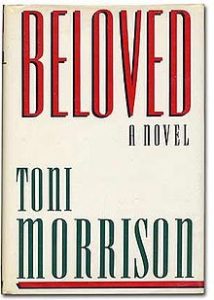

belovednovel_classic-review
Freeing yourself was one thing, claiming ownership of that freed self was another.
“…another triumph. Indeed, Ms. Morrison’s versatility and technical and emotional range appear to know no bounds. If there were any doubts about her stature as a pre-eminent American novelist, of her own or any other generation, Beloved will put them to rest. In three words or less, it’s a hair-raiser … Through the different voices and memories of the book, including that of Sethe’s mother, a survivor of the infamous slave-ship crossing, we experience American slavery as it was lived by those who were its objects of exchange, both at its best—which wasn’t very good—and at its worst, which was as bad as can be imagined. Above all, it is seen as one of the most viciously antifamily institutions human beings have ever devised. The slaves are motherless, fatherless, deprived of their mates, their children, their kin. It is a world in which people suddenly vanish and are never seen again, not through accident or covert operation or terrorism, but as a matter of everyday legal policy … Beloved is written in an antiminimalist prose that is by turns rich, graceful, eccentric, rough, lyrical, sinuous, colloquial and very much to the point.”

Toni Morrison - Nobel Lecture - NobelPrize.org

https://www.nobelprize.org/prizes/literature/1993/morrison/lecture/


1993/12/07 - Listen to an audio recording of Toni Morrison's Nobel Lecture. “Once upon a time there was an old woman. Blind but wise.” Or was it an old man? A guru, perhaps. Or a griot soothing restless children. I have heard this story, ...

Toni Morrison - Banquet speech - NobelPrize.org

https://www.nobelprize.org/prizes/literature/1993/morrison/speech/


Toni Morrison's speech at the Nobel Banquet, December 10, 1993. Your Majesties, Your Royal Highnesses, Ladies and Gentlemen,. I entered this hall pleasantly haunted by those who have entered it before me. That company of Laureates is ...

---她的小說予人最恆久的印象乃是對人性的同情以及對人類的觀照,而且總是富於幽默。
其作品中史詩的力量、對話的精準及詩意盎然地呈現美國黑人世界,格外令人激賞。---1993,瑞典皇家學院,“童妮.摩里森頌辭”(摘錄)。


“We die. That may be the meaning of life. But we do language. That may be the measure of our lives.”

We are profoundly sad to report that Toni Morrison has died at the age of eighty-eight. She died last night at Montefiore Medical Center in New York.

The Bluest Eye, Morrison’s first novel, was published by Holt, Rinehart and Winston in 1970. Morrison followed with Sula in 1973, and nine subsequent novels, all of them published with Alfred A. Knopf.

Morrison’s novels were celebrated and embraced by booksellers, critics, educators, readers, and librarians. Her work also ignited controversy, notably in school districts that tried to ban her books. Few American writers won more awards for their books and writing. Morrison was awarded the Pulitzer Prize in 1988 for Beloved. In 1993, she was awarded the Nobel Prize in Literature, with the Swedish Academy recognizing her as an author “who in novels characterized by visionary force and poetic import, gives life to an essential aspect of American reality.” In 1996, she was honored with the National Book Foundation’s Medal of Distinguished Contribution to American Letters, and in 2012, President Barack Obama presented her with the Presidential Medal of Freedom.

Morrison also worked as an editor at Random House – the first female African-American editor in company history – from 1967 to 1983. There, she published Gayl Jones, Toni Cade Bambara, Henry Dumas, Huey P. Newton, Muhammad Ali, and Angela Davis, among others. Her work as an editor and publisher at Random House demonstrated a unique commitment to writers of color, and helped in opening industry doors to them.

And for over five decades, Morrison was also a part-time teacher of creative writing and literature, often bringing students together with other writers, at Howard University (from which she graduated in 1953), Yale University, SUNY Purchase, Bard College, Rutgers University, SUNY Albany, and Princeton University, where she retired as Robert F. Goheen Chair in the Humanities in 2006.

Many at Knopf and Random House came to know her as a valued colleague and dear friend.

The Morrison family issued this statement: “It is with profound sadness we share that, following a short illness, our adored mother and grandmother, Toni Morrison, passed away peacefully last night surrounded by family and friends. She was an extremely devoted mother, grandmother, and aunt who reveled in being with her family and friends. The consummate writer who treasured the written word, whether her own, her students or others, she read voraciously and was most at home when writing. Although her passing represents a tremendous loss, we are grateful she had a long, well lived life.

While we would like to thank everyone who knew and loved her, personally or through her work, for their support at this difficult time, we ask for privacy as we mourn this loss to our family. We will share information in the near future about how we will celebrate Toni’s incredible life.”

Robert Gottlieb, Morrison’s longtime editor at Knopf, said: “She was a great woman and a great writer, and I don’t know which I will miss more.”

Sonny Mehta, Chairman of Knopf, said: “Toni Morrison’s working life was spent in the service of literature: writing books, reading books, editing books, teaching books. I can think of few writers in American letters who wrote with more humanity or with more love for language than Toni. Her narratives and mesmerizing prose have made an indelible mark on our culture. Her novels command and demand our attention. They are canonical works, and more importantly, they are books that remain beloved by readers.”

February 18, 1931 – August 5, 2019
(Posted by the author's publisher)

Toni MorrisonHarvard University


Toni Morrison will deliver the Charles Eliot Norton Lectures this spring at Harvard University. The overarching theme of Morrison’s six lectures is “The Origins of Others: The Literature of Belonging.” The first, titled “Romancing Slavery,” is set for March 2. The talks will be held at Sander's Theatre Harvard University.


(Posted by the author's publisher).


Morrison’s first Norton Lecture set for March 2


Toni Morrison will deliver the Charles Eliot Norton Lectures, which will be held throughout March and April at Sanders Theatre. Hosted by the Mahindra Humanities Center, Morrison is the 58th scholar to be given the arts and…


NEWS.HARVARD.EDU


Everyman's Library 分享了 Toni Morrison相片


In this celebrated novel, Nobel Prize-winning author Toni Morrisoncreated a new way of rendering the contradictory nuances of black life in America. Its earthy poetic language and striking use of folklore and myth established Morrison as a major voice in contemporary fiction...

Toni Morrison11月28日 7:00 · New Milford, CT, United States ·


“It sounded old. Deserve. Old and tired and beaten to death. Deserve. Now it seemed to him that he was always saying or thinking that he didn't deserve some bad luck, or some bad treatment from others. He'd told Guitar that he didn't "deserve" his family's dependence, hatred, or whatever. That he didn't even "deserve" to hear all the misery and mutual accusations his parents unloaded on him. Nor did he "deserve" Hagar's vengeance. But why shouldn't his parents tell him their personal problems? If not him, then who? And if a stranger could try to kill him, surely Hagar, who knew him and whom he'd thrown away like a wad of chewing gum after the flavor was gone––she had a right to try to kill him too.


Apparently he though he deserved only to be loved--from a distance, though--and given what he wanted. And in return he would be...what? Pleasant? Generous? Maybe all he was really saying was: I am not responsible for your pain; share your happiness with me but not your unhappiness.”
― from SONG OF SOLOMON

Book:Milkman Dead was born shortly after a neighborhood eccentric hurled himself off a rooftop in a vain attempt at flight. For the rest of his life he, too, will be trying to fly. With this brilliantly imagined novel, Toni Morrison transfigures the coming-of-age story as audaciously as Saul Bellow or Gabriel García Márquez. As she follows Milkman from his rustbelt city to the place of his family’s origins, Morrison introduces an entire cast of strivers and seeresses, liars and assassins, the inhabitants of a fully realized black world. READ an excerpt here: http://knopfdoubleday.com/…/…/song-of-solomon/9780679445043/

(Posted by the author's publisher)


Vintage Books & Anchor Books


"It never occurred to either of us that the earth itself might have been unyielding. We had dropped our seeds in our own little plot of black dirt just as Pecola's father had dropped his seeds in his own plot of black dirt. Our innocence and faith were no more productive than his lust or despair."


--from "The Bluest Eye" By Toni Morrison


"Love is never any better than the lover. ”

“Anger is better. There is a sense of being in anger. A reality and presence. An awareness of worth. It is a lovely surging.”


Pecola Breedlove, a young black girl, prays every day for beauty. Mocked by other children for the dark skin, curly hair, and brown eyes that set her apart, she yearns for normalcy, for the blond hair and blue eyes that she believes will allow her to finally fit in.Yet as her dream grows more fervent, her life slowly starts to disintegrate in the face of adversity and strife. A powerful examination of our obsession with beauty and conformity, Toni Morrison’s virtuosic first novel asks powerful questions about race, class, and gender with the subtlety and grace that have always characterized her writing. READ an excerpt here: http://knopfdoubleday.com/book/117662/the-bluest-eye/

2008年11月29日 星期六

100 Notable Books of 2008

每年看紐約時報的年度百本好書單
我們可能只好自嘆自己活在另外的世界

Holiday Books

100 Notable Books of 2008


Published: November 26, 2008

The Book Review has selected this list from books reviewed since Dec. 2, 2007, when we published our previous Notables list.

Skip to next paragraph
Illustration by Paul Cox

Related

Notable Children’s Books of 2008 (December 7, 2008)

A Slide Show of the Best Illustrated Children’s Books 2008

Paper Cuts Blog: Picking the Notable Books of the Year

More Notable Books Lists

2007 | 2006 | 2005 | 2004 | 2003 | 2002 | 2001 | 2000 | 1999 | 1998 | 1997

The best of this year's gift books, classical music CD's, boxed sets, video games and DVD's, chosen by our critics.

Go to Gift Guide »

Fiction & Poetry

AMERICAN WIFE. By Curtis Sittenfeld. (Random House, $26.) The life of this novel’s heroine — a first lady who comes to realize, at the height of the Iraq war, that she has compromised her youthful ideals — is conspicuously modeled on that of Laura Bush.

ATMOSPHERIC DISTURBANCES. By Rivka Galchen. (Farrar, Straus & Giroux, $24.) The psychiatrist-narrator of this brainy, whimsical first novel believes that his beautiful, much-younger Argentine wife has been replaced by an exact double.

BASS CATHEDRAL. By Nathaniel Mackey. (New Directions, paper, $16.95.) Mackey’s fictive world is an insular one of musicians composing, playing and talking jazz in the private language of their art.

BEAUTIFUL CHILDREN. By Charles Bock. (Random House, $25.) This bravura first novel, set against a corruptly compelling Las Vegas landscape, revolves around the disappearance of a surly 12-year-old boy.

BEIJING COMA. By Ma Jian. Translated by Flora Drew. (Farrar, Straus & Giroux, $27.50.) Ma’s novel, an important political statement, looks at China through the life of a dissident paralyzed at Tiananmen Square.

A BETTER ANGEL: Stories. By Chris Adrian. (Farrar, Straus & Giroux, $23.) For Adrian — who is both a pediatrician and a divinity student — illness and a heightened spiritual state are closely related conditions.

BLACK FLIES. By Shannon Burke. (Soft Skull, paper, $14.95.) A rookie paramedic in New York City is overwhelmed by the horrors of his job in this arresting, confrontational novel, informed by Burke’s five years of experience on city ambulances.

THE BLUE STAR. By Tony Earley. (Little, Brown, $23.99.) The caring, thoughtful hero of Earley’s engrossing first novel, “Jim the Boy,” is now 17 and confronting not only the eternal turmoil of love, but also venality and the frightening calls of duty and war.

THE BOAT. By Nam Le. (Knopf, $22.95.) In the opening story of Le’s first collection, a blocked writer succumbs to the easy temptations of “ethnic lit.”

BREATH. By Tim Winton. (Farrar, Straus & Giroux, $23.) Surfing offers this darkly exhilarating novel’s protagonist an escape from a drab Australian town.

DANGEROUS LAUGHTER: Thirteen Stories. By Steven Millhauser. (Knopf, $24.) In his latest collection, Millhauser advances his chosen themes — the slippery self, the power of hysterical young people — with even more confidence and power than before.

DEAR AMERICAN AIRLINES. By Jonathan Miles. (Houghton Mifflin, $22.) Miles’s fine first novel takes the form of a letter from a stranded traveler, his life a compilation of regrets, who uses the time to digress on an impressive array of cultural issues, large and small.

DIARY OF A BAD YEAR. By J. M. Coet­zee. (Viking, $24.95.) Coetzee follows the late career of one Señor C, who, like Coetzee himself, is a South African writer transplanted to Australia and the author of a novel titled “Waiting for the Barbarians.”

DICTATION: A Quartet. By Cynthia Ozick. (Houghton Mifflin, $24.) In the title story of this expertly turned collection, Henry James and Joseph Conrad embody Ozick’s polarity of art and ardor.

ELEGY: Poems. By Mary Jo Bang. (Graywolf, $20.) Grief is converted into art in this bleak, forthright collection, centered on the death of the poet’s son.

THE ENGLISH MAJOR. By Jim Harrison. (Grove, $24.) A 60-year-old cherry farmer and former English teacher — an inversion of the classic Harrison hero — sets out on a trip west after being dumped by his wife.

FANON. By John Edgar Wideman. (Houghton Mifflin, $24.) Wideman’s novel — raw and astringent, yet with a high literary polish — explores the life of the psychiatrist and revolutionary Frantz Fanon.

THE FINDER. By Colin Harrison. (Sarah Crichton/Farrar, Straus & Giroux, $25.) A New York thriller, played out against the nasty world of global capitalism.

FINE JUST THE WAY IT IS: Wyoming Stories 3 . By Annie Proulx. (Scribner, $25.) These rich, bleak stories offer an American West in which the natural elements are murderous and folks aren’t much better.

THE GOOD THIEF . By Hannah Tinti. (Dial, $25.) In Tinti’s first novel, set in mid-19th-century New England, a con man teaches an orphan the art of the lie.

HALF OF THE WORLD IN LIGHT: New and Selected Poems. By Juan Felipe Herrera. (University of Arizona, paper, $24.95.) Herrera, known for portrayals of Chicano life, is unpredictable and wildly inventive.

HIS ILLEGAL SELF. By Peter Carey. (Knopf, $25.) In this enthralling novel, a boy goes underground with a defiant hippie indulging her maternal urge.

HOME. By Marilynne Robinson. (Farrar, Straus & Giroux, $25.) Revisiting the events of her novel “Gilead” from another perspective, Robinson has written an anguished pastoral, at once bitter and joyful.

INDIGNATION. By Philip Roth. (Houghton Mifflin, $26.) Marcus Messner is a sophomore at a small, conservative Ohio college at the time of the Korean War. The novel he narrates, like Roth’s last two, is ruthlessly economical and relentlessly deathbound.

THE LAZARUS PROJECT. By Aleksandar Hemon. (Riverhead, $24.95.) This novel’s despairing immigrant protagonist becomes intrigued with the real-life killing of a presumed anarchist in Chicago in 1908.

LEGEND OF A SUICIDE. By David Vann. (University of Massachusetts, $24.95.) In his first story collection, Vann leads the reader to vital places while exorcizing demons born from the suicide of his father.

LIFE CLASS. By Pat Barker. (Doubleday, $23.95.) Barker’s new novel, about a group of British artists overtaken by World War I, concentrates more on the turmoil of love than on the trauma of war.

LUSH LIFE. By Richard Price. (Farrar, Straus & Giroux, $26.) Chandler — and Bellow, too — peeps out from Price’s novel, in which an aspiring writer cum restaurant manager, mugged in the gentrifying Lower East Side of Manhattan, himself becomes a suspect.

A MERCY. By Toni Morrison. (Knopf, $23.95.) Summoning voices from the 17th century, Morrison performs her deepest excavation yet into America’s history and exhumes the country’s twin original sins: the importation of African slaves and the near extermination of Native Americans.

MODERN LIFE: Poems . By Matthea Harvey. (Graywolf, paper, $14.) Harvey is willing to take risks, and her reward is that richest, rarest thing, genuine poetry.

A MOST WANTED MAN . By John le Carré. (Scribner, $28.) This powerful novel, centered on a half-Russian, half-Chechen, half-crazy fugitive in Germany, swims with operatives whose desperation to avert another 9/11 provokes a slow-­burning fire in every line.

MY REVOLUTIONS. By Hari Kunzru. (Dutton, $25.95.) Kunzru’s third novel is an extraordinary autumnal depiction of a failed ’60s radical.

NETHERLAND. By Joseph O’Neill. (Pantheon, $23.95.) In the wittiest, angriest, most exacting and most desolate work of fiction yet about post-9/11 New York and London, the game of cricket provides solace to a man whose family disintegrates after the attacks.

OPAL SUNSET: Selected Poems, 1958-2008. By Clive James. (Norton, $25.95.) James, a staunch formalist, is firmly situated in the sociable, plain-spoken tradition that runs from Auden through Larkin.

THE OTHER. By David Guterson. (Knopf, $24.95.) In this novel from the author of “Snow Falling on Cedars,” a schoolteacher nourishes a friendship with a privileged recluse.

OUR STORY BEGINS: New and Selected Stories. By Tobias Wolff. (Knopf, $26.95.) Some of Wolff’s best work is concentrated here, revealing his gift for evoking the breadth of American experience.

THE ROAD HOME. By Rose Tremain. (Little, Brown, $24.99.) A widowed Russian emigrant, fearfully navigating the strange city of London, learns that his home village is about to be inundated.

THE SACRED BOOK OF THE WEREWOLF. By Victor Pelevin. Translated by Andrew Bromfield. (Viking, $25.95.) A supernatural call girl narrates Pelevin’s satirical allegory of post-Soviet, post-9/11 Russia.

THE SCHOOL ON HEART’S CONTENT ROAD. By Carolyn Chute. (Atlantic Monthly, $24.) In Chute’s first novel in nearly 10 years, disparate characters cluster around an off-the-grid communal settlement.

SIR GAWAIN AND THE GREEN KNIGHT: A New Verse Translation. By Simon Armitage. (Norton, $25.95.) One of the eerie, exuberant joys of Middle English poetry, in an alliterative rendering that captures the original’s drive, dialect and landscape.

SLEEPING IT OFF IN RAPID CITY: Poems, New and Selected. By August Kleinzahler. (Farrar, Straus & Giroux, $26.) Kleinzahler seeks the true heart of places, whether repellent, beautiful or both at once.

TELEX FROM CUBA. By Rachel Kushner. (Scribner, $25.) In this multilayered first novel, inter­national drifters try to bury pasts that include murder, adultery and neurotic meltdown, even as the Castro brothers gather revolutionaries in the hills.

2666. By Roberto Bolaño. Translated by Natasha Wimmer. (Farrar, Straus & Giroux, cloth and paper, $30.) The five autonomous sections of this posthumously published novel interlock to form an astonishing whole, a supreme capstone to Bolaño’s vaulting ambition.

UNACCUSTOMED EARTH. By Jhumpa Lahiri. (Knopf, $25.) In eight sensitive stories, Lahiri evokes the anxiety, excitement and transformations felt by Bengali immigrants and their American children.

THE UNFORTUNATES. By B. S. Johnson. (New Directions, $24.95.) This novel, first published in 1969, dovetails theme (the accidents of memory) with eccentric form (unbound chapters to be read in any order).

WHEN WILL THERE BE GOOD NEWS? By Kate Atkinson. (Little, Brown, $24.99.) Jackson Brodie, the hero of Atkinson’s previous literary thrillers, takes the case of a mother and baby who suddenly disappear.

THE WIDOWS OF EASTWICK. By John Updike. (Knopf, $24.95.) In this ingenious sequel to “The Witches of Eastwick,” the three title characters, old ladies now, renew their sisterhood, return to their old hometown and contrive to atone for past crimes.

YESTERDAY’S WEATHER. By Anne Enright. (Grove, $24.) Working-class Irish characters grapple with love, marriage, confusion and yearning in Enright’s varied, if somewhat disenchanted, stories.


Nonfiction

AMERICAN LION: Andrew Jackson in the White House . By Jon Meacham. (Random House, $30.) Meacham, the editor of Newsweek, discerns a democratic dignity in the seventh president’s populism.

ANGLER: The Cheney Vice Presidency. By Barton Gellman. (Penguin Press, $27.95.) An engrossing portrait of Dick Cheney as a master political manipulator.

BACARDI AND THE LONG FIGHT FOR CUBA: The Biography of a Cause. By Tom Gjelten. (Viking, $27.95.) An NPR correspondent paints a vivid portrait of the anti-Castro clan behind the liquor empire.

THE BIG SORT: Why the Clustering of Like-Minded America Is Tearing Us Apart. By Bill Bishop with Robert G. Cushing. (Houghton Mifflin, $25.) A journalist and a statistician see political dangers in the country’s increasing tendency to separate into solipsistic blocs.

BLOOD MATTERS: From Inherited Illness to Designer Babies, How the World and I Found Ourselves in the Future of the Gene. By Masha Gessen. (Harcourt, $25.) Hard choices followed Gessen’s discovery that she carries a dangerous genetic mutation.

CAPITOL MEN: The Epic Story of Reconstruction Through the Lives of the First Black Congressmen. By Philip Dray. (Houghton Mifflin, $30.) A collective biography of the pioneers of black political involvement.

THE CHALLENGE: Hamdan v. Rumsfeld and the Fight Over Presidential Power. By Jonathan Mahler. (Farrar, Straus & Giroux, $26.) An objective, thorough study of a landmark case for Guantánamo detainees.

CHAMPLAIN’S DREAM. By David Hackett Fischer. (Simon & Schuster, $40.) Fischer argues that France’s North Ameri­can colonial success was attributable largely to one remarkable man, Samuel de Champlain.

CHASING THE FLAME: Sergio Vieira de Mello and the Fight to Save the World. By Samantha Power. (Penguin Press, $32.95.) Vieira de Mello, who was killed in Iraq in 2003, embodied both the idealism and the limitations of the United Nations, which he served long and loyally.

CONDOLEEZZA RICE. An American Life: A Biography. By Elisabeth Bumiller. (Random House, $27.95.) A New York Times reporter casts a keen eye on Rice’s tenure as a policy maker, her close ties to George Bush, and her personal and professional past.

THE DARK SIDE: The Inside Story of How the War on Terror Turned Into a War on American Ideals. By Jane Mayer. (Doubleday, $27.50.) A New Yorker writer recounts the emergence of the widespread use of torture as a central tool in the fight against terrorism.

DELTA BLUES: The Life and Times of the Mississippi Masters Who Revolutionized American Music. By Ted Gioia. (Norton, $27.95.) Gioia’s survey balances the story of the music with that of its reception.

DESCARTES’ BONES: A Skeletal History of the Conflict Between Faith and Reason. By Russell Shorto. (Doubleday, $26.) Shorto’s smart, elegant study turns the early separation of Descartes’s skull from the rest of his remains into an irresistible metaphor.

DREAMS AND SHADOWS: The Future of the Middle East. By Robin Wright. (Penguin Press, $26.95.) This fluent and intelligent book describes the struggles of people from Morocco to Iran to reform or replace long-entrenched national regimes.

THE DRUNKARD’S WALK: How Randomness Rules Our Lives. By Leonard Mlodinow. (Pantheon, $24.95.) This breezy crash course intersperses probabilistic mind-benders with profiles of theorists.

AN EXACT REPLICA OF A FIGMENT OF MY IMAGINATION: A Memoir. By Elizabeth McCracken. (Little, Brown, $19.99.) An unstinting account of the novelist’s emotions after the stillbirth of her first child.

FACTORY GIRLS: From Village to City in a Changing China. By Leslie T. Chang. (Spiegel & Grau, $26.) Chang’s engrossing account delves deeply into the lives of young migrant workers in southern China.

THE FOREVER WAR. By Dexter Filkins. (Knopf, $25.) Filkins, a New York Times reporter who was embedded with American troops during the attack on Falluja, has written an account of the Iraq war in the tradition of Michael Herr’s “Dispatches.”

FREEDOM’S BATTLE: The Origins of Humanitarian Intervention. By Gary J. Bass. (Knopf, $35.) Bass’s book is both a history and an argument for military interventions as a tool of international justice today.

A GREAT IDEA AT THE TIME: The Rise, Fall, and Curious Afterlife of the Great Books. By Alex Beam. (Public­Affairs, $24.95.) The minds behind a curious project that continues to exert a hold in some quarters.

HALLELUJAH JUNCTION: Composing an American Life. By John Adams. (Farrar, Straus & Giroux, $26.) Adams’s wry, smart memoir stands with books by Hector Berlioz and Louis Armstrong among the most readably incisive autobiographies of major musical figures.

THE HEMINGSES OF MONTICELLO: An American Family. By Annette Gordon-Reed. (Norton, $35.) Gordon-Reed continues her study of the relationship between Sally Hemings and Thomas Jefferson.

HOT, FLAT, AND CROWDED: Why We Need a Green Revolution — and How It Can Renew America. By Thomas L. Friedman. (Farrar, Straus & Giroux, $27.95.) The Times columnist turns his attention to possible business-friendly solutions to global warming.

THE HOUSE AT SUGAR BEACH: In Search of a Lost African Childhood. By Helene Cooper. (Simon & Schuster, $25.) Cooper, a New York Times reporter who fled a warring Liberia as a child, returned to confront the ghosts of her past — and to look for a lost sister.

HOW FICTION WORKS. By James Wood. (Farrar, Straus & Giroux, $24.) Concentrating on the art of the novel, the New Yorker critic presents a compact, erudite vade mecum with acute observations on individual passages and authors.

MORAL CLARITY: A Guide for Grown-Up Idealists. By Susan Neiman. (Harcourt, $27.) Neiman champions Enlightenment values with no hint of over­simplification, dogmatism or misplaced piety.

THE NIGHT OF THE GUN: A Reporter Investigates the Darkest Story of His Life. His Own. By David Carr. (Simon & Schuster, $26.) Carr, a New York Times culture reporter, sifts through his drug- and alcohol-­addicted past.

NIXONLAND: The Rise of a President and the Fracturing of America. By Rick Perlstein. (Scribner, $37.50.) Perlstein’s compulsively readable study holds that Nixon’s divisive and enduring legacy is the “notion that there are two kinds of Americans.”

NOTHING TO BE FRIGHTENED OF. By Julian Barnes. (Knopf, $24.95.) With no faith in an afterlife, why should an agnostic fear death? On this simple question, Barnes hangs an elegant memoir and meditation, full of a novelist’s affection for the characters who wander in and out.

NUREYEV: The Life. By Julie Kavanagh. (Pantheon, $37.50.) The son of Soviet Tatars could never get enough of anything — space, applause, money, sex — but he attracted an audience of millions to the art form he mastered.

PICTURES AT A REVOLUTION: Five Movies and the Birth of the New Hollywood. By Mark Harris. (Penguin Press, $27.95.) The best-picture nominees of 1967 were a collage of America’s psyche, and more.

THE POST-AMERICAN WORLD. By Fareed Zakaria. (Norton, $25.95.) This relentlessly intelligent examination of power focuses less on American decline than on the rise of China, trailed by India.

PREDICTABLY IRRATIONAL: The Hidden Forces That Shape Our Decisions. By Dan Ariely. (Harper/HarperCollins, $25.95.) Moving comfortably from the lab to broad social questions to his own life, an M.I.T. economist pokes holes in conventional market theory.

THE RACE CARD: How Bluffing About Bias Makes Race Relations Worse. By Richard Thompson Ford. (Farrar, Straus & Giroux, $26.) Ford vivisects every sacred cow in “post-racist” America.

RETRIBUTION: The Battle for Japan, 1944-45. By Max Hastings. (Knopf, $35.) In this masterly account, Hastings describes Japanese madness eliciting American ruthlessness in the Pacific Theater.

A SECULAR AGE. By Charles Taylor. (Belknap/Harvard University, $39.95.) A philosophy professor thinks our era has been too quick to dismiss religious faith.

SHAKESPEARE’S WIFE. By Germaine Greer. (Harper/HarperCollins, $26.95.) With a polemicist’s vision and a scholar’s patience, Greer sets out to rescue Ann Hathaway from layers of biographical fantasy.

THE SUPERORGANISM: The Beauty, Elegance, and Strangeness of Insect Societies. By Bert Hölldobler and Edward O. Wilson. (Norton, $55.) The central conceit of this astonishing study is that an insect colony is a single animal raised to a higher level.

TELL ME HOW THIS ENDS: General David Petraeus and the Search for a Way Out of Iraq. By Linda Robinson. (Public­Affairs, $27.95.) A probing, conscientious account of strategy and tactics in post-surge Iraq.

THE TEN-CENT PLAGUE: The Great Comic-Book Scare and How It Changed America. By David Hajdu. (Farrar, Straus & Giroux, $26.) A worthy history of the midcentury crusade against the comics industry.

THEY KNEW THEY WERE RIGHT: The Rise of the Neocons. By Jacob Heil­brunn. (Doubleday, $26.) A journalist traces the neoconservative movement from its origins at the City College of New York in the 1940s.

THIS REPUBLIC OF SUFFERING: Death and the American Civil War. By Drew Gilpin Faust. (Knopf, $27.95.) The lasting impact of the war’s immense loss of life is the subject of this extraordinary account by Harvard’s president.

THE THREE OF US: A Family Story. By Julia Blackburn. (Pantheon, $26.) Searingly and unflinchingly, Blackburn describes an appalling upbringing at the hands of her catastrophically unfit parents.

THRUMPTON HALL: A Memoir of Life in My Father’s House. By Miranda Seymour. (Harper/HarperCollins, $24.95.) Seymour’s odd and oddly affecting book instantly catapults her father into the front rank of impossible and eccentric English parents.

TRAFFIC: Why We Drive the Way We Do (And What It Says About Us). By Tom Vanderbilt. (Knopf, $24.95.) A surprising, enlightening look at the psychology of the human beings behind the steering wheels.

THE TRILLION DOLLAR MELTDOWN: Easy Money, High Rollers, and the Great Credit Crash. By Charles R. Morris. (PublicAffairs, $22.95.) How we got into the mess we’re in, explained briefly and brilliantly.

A VOYAGE LONG AND STRANGE: Rediscovering the New World. By Tony Horwitz. (Holt, $27.50.) An accessible popular history of early America, with plenty of self-tutoring and colorful reporting.

WAKING GIANT: America in the Age of Jackson. By David S. Reynolds. (Harper/HarperCollins, $29.95.) Reynolds excels at depicting the cultural, social and intellectual currents that buffeted the nation.

WHILE THEY SLEPT: An Inquiry Into the Murder of a Family. By Kathryn Harrison. (Random House, $25.) Harrison’s account brings moral clarity to the dark fate of the family of Jody Gilley, who was 16 when she survived a rampage by her brother in 1984.

WHITE HEAT: The Friendship of Emily Dickinson and Thomas Wentworth Higginson. By Brenda Wineapple. (Knopf, $27.95.) The hitherto elusive Higginson was the poet’s chosen reader, admirer and advocate.

THE WILD PLACES. By Robert Macfarlane. (Penguin, paper, $15.) Macfarlane’s unorthodox British landscapes are furrowed with human histories and haunted by literary prophets.

THE WORLD IS WHAT IT IS: The Authorized Biography of V. S. Naipaul. By Patrick French. (Knopf, $30.) French has created a monument fully worthy of its subject, elucidating the enduring but painfully asymmetrical love triangle at the core of Naipaul’s life and work.

網誌存檔