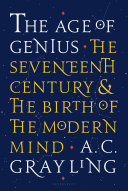
The Age of Genius: The Seventeenth Century and the Birth of the Modern Mind
René Descartes expanded his famous philosophical idea into the full phrase: "I doubt, therefore I think, therefore I am." [ 1, 2, 3] In his posthumously published work, The Search for Truth by Natural Light, Descartes expressed this exact progression in Latin: [ 1]
"Dubito, ergo sum, vel, quod idem est, cogito, ergo sum."
(Translation: "I doubt, therefore I am—or what is the same—I think, therefore I am.")
- Doubt: Descartes was performing "methodic doubt," questioning everything around him to see if there was any absolute truth he could not deny. [1, 2]
- Thinking: He realized that even if he doubts his senses, his surroundings, or is being deceived, the very act of doubting means he is thinking. [1]
- Existence: You cannot have thoughts or doubts without a mind doing the doubting. Therefore, the simple act of questioning your own existence serves as undeniable proof that you exist. [1, 2]
If you'd like to explore this, I can: - Detail the famous "Evil Demon" thought experiment Descartes used to arrive at this conclusion.
- Compare this quote to the Latin original (Cogito, ergo sum).
A. C. Grayling
Bloomsbury Publishing, 2016/03/01 - 368 ページ
1 レビュー
The Age of Genius explores the eventful intertwining of outward event and inner intellectual life to tell, in all its richness and depth, the story of the 17th century in Europe. It was a time of creativity unparalleled in history before or since, from science to the arts, from philosophy to politics. Acclaimed philosopher and historian A.C. Grayling points to three primary factors that led to the rise of vernacular (popular) languages in philosophy, theology, science, and literature; the rise of the individual as a general and not merely an aristocratic type; and the invention and application of instruments and measurement in the study of the natural world.
Grayling vividly reconstructs this unprecedented era and breathes new life into the major figures of the seventeenth century intelligentsia who span literature, music, science, art, and philosophy--Shakespeare, Monteverdi, Galileo, Rembrandt, Locke, Newton, Descartes, Vermeer, Hobbes, Milton, and Cervantes, among many more. During this century, a fundamentally new way of perceiving the world emerged as reason rose to prominence over tradition, and the rights of the individual took center stage in philosophy and politics, a paradigmatic shift that would define Western thought for centuries to come.
譯者: 吳萬偉 / 肖志清
出版年: 2019-12
頁數: 387
定價: CNY58.0
裝幀: 平裝
ISBN: 9787521707243
內容簡介 · · · · · ·
歐洲的17世紀,堪稱是一個戰火紛飛的世紀,100年中只有3年沒有打仗,歐洲的社會面貌發生了劇烈的變遷。同時這也是一個創造力大爆發的世紀,歐洲學者在思想領域取得了輝煌成就,湧現出伽利略、培根、笛卡兒、牛頓、玻意耳、霍布斯、約翰•洛克等一大批科學和思想的巨人,正是這一個世紀的巨變將西方文明推上了人類歷史舞臺的正中。《天才時代》探索了17世紀歐洲社會變遷和思想進步之間的聯繫。
殘酷的三十年戰爭沉重打擊了天主教會的思想壟斷,使得信仰和思想逐漸獲得自由。正因如此,17世紀也成為一個思想上魚龍混雜、泥沙俱下的時代。這個時代既有一絲不苟的科學探索,又有對超自然力量的強烈熱衷,對煉金術、神秘學、占星術、魔法的癡迷;連牛頓、笛卡兒等新世界觀的開創者,也與它們有說不清道不明的聯繫。但是喧囂會逐漸結束,科學思維終於從迷霧中走出,構成現代思想的基石。

著者について (2016)
A.C. Grayling is professor of philosophy at and Master of the New College of the Humanities, London. He believes that philosophy should take an active, useful role in society and is a prolific author whose books include philosophy, ethics, biography, history, drama and essays. He has been a regular contributor to the Times, Financial Times, the Observer, the Independent on Sunday, the Economist, the Literary Review, New Statesman, and Prospect, and is a frequent and popular contributor to radio and television programs, including Newsnight, Today, In Our Time, Start the Week, and CNN News. Among his recent books are Towards the Light: The Story of the Struggle for Liberty and Rights that Made the Modern West, Liberty in the Age of Terror, Descartes, The Good Book: A Secular Bible, and The God Argument. |

沒有留言:
張貼留言